
Category
Wealth building is not one tactic. It is a system of earning, saving, investing, acquiring useful assets, managing risk, and repeating smart decisions over time. RichifyNow's wealth-building guides help readers understand the foundations of long-term financial progress without relying on hype or unrealistic promises.
Wealth building means increasing long-term financial stability through income growth, savings, investing education, asset acquisition, risk management, and consistent behavior. A strong wealth system starts with cash flow and financial resilience before moving into advanced strategies.
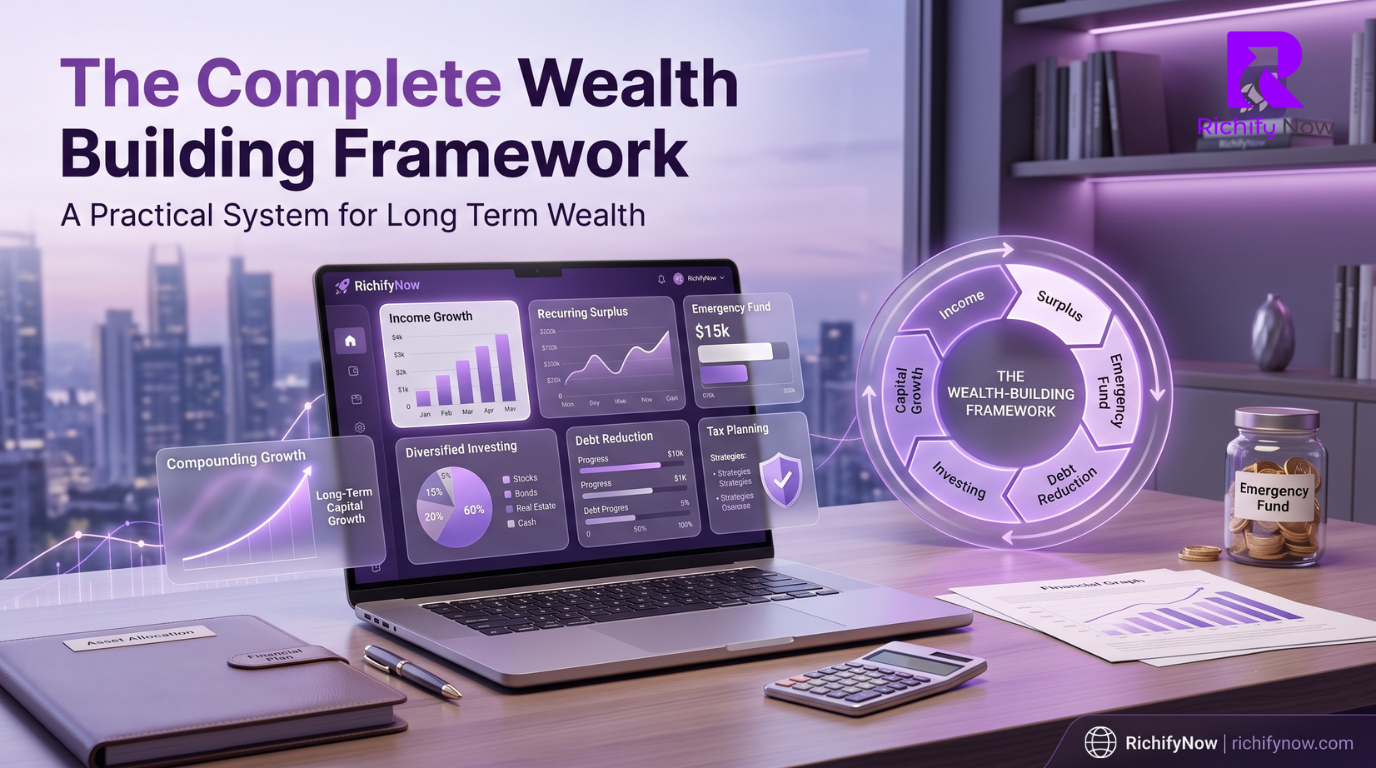
Wealth building is not one tactic or lucky investment. It is a system that starts with durable income, recurring surplus, emergency resilience, smart debt control, low-cost diversified investing, tax awareness, and stable behavior over time. This guide explains the complete framework for building long term wealth with practical charts, tables etc.
Read the complete guideWealth building is the long-term process of increasing financial security through income growth, disciplined spending, emergency savings, debt management, investing, asset ownership, and risk protection. It is not based on one investment or income source. A strong wealth-building system combines several financial habits and assets that can improve a person's financial position over time.
A beginner should normally start by understanding monthly cash flow, creating a realistic budget, building an emergency reserve, addressing expensive debt, and increasing earning capacity. Once these foundations are stable, the person can study diversified long-term investing and other appropriate assets. The Consumer Financial Protection Bureau describes an emergency fund as cash specifically reserved for unplanned expenses or financial emergencies.
Income is money received from work, business, investments, or other sources. Savings are the portion of income that is not spent. Wealth is the value of what someone owns after subtracting what they owe. A person can have a high income but limited wealth if most income is consumed or used to service debt.
Wealth-building assets may include cash reserves, diversified investment funds, individual securities, retirement accounts, businesses, websites, intellectual property, real estate, digital products, and valuable professional skills. Each asset has different costs, risks, liquidity, and maintenance requirements. Investment diversification can help reduce exposure to the failure of one company or sector, although it does not eliminate loss.
There is no universal wealth-building timeline. Progress depends on income, expenses, debt, savings rate, investment performance, business results, risk exposure, and consistency. Some income improvements can happen quickly, while meaningful asset accumulation may take years. Readers should focus on measurable progress rather than guaranteed deadlines or unrealistic wealth promises.
We will use this email to record and deliver your requested resource.