Economic Analysis

Capital Intelligence
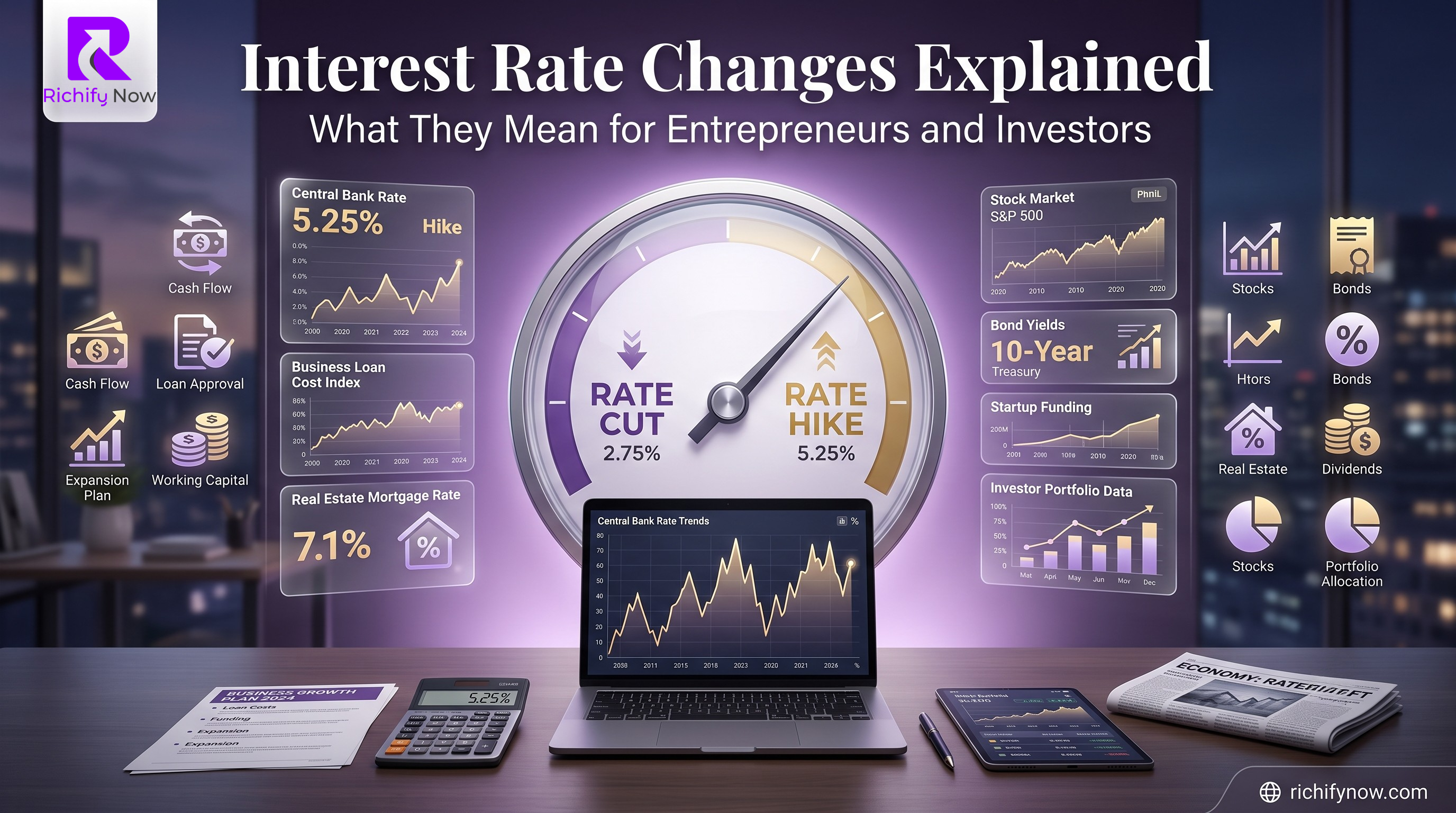
Economic analysis helps readers understand how inflation, rates, liquidity, regulation, market structure, and institutional behavior affect business and capital decisions. RichifyNow explains these topics as education, not prediction.
Economic analysis studies how economic forces affect markets, businesses, capital, liquidity, risk, and decision-making. It can help readers think more clearly about uncertainty, but it should not be treated as a guaranteed forecast.
Frequently Asked Questions About Economic Analysis
Economic analysis examines how production, spending, employment, prices, credit, trade, government policy, and financial conditions affect households, businesses, and markets. It may use data, models, historical comparisons, and scenario analysis to understand current conditions and possible outcomes.
Microeconomic analysis focuses on individual consumers, businesses, industries, prices, and incentives. Macroeconomic analysis examines the wider economy, including growth, inflation, employment, monetary policy, trade, and national output. Business decisions may require both perspectives.
GDP measures the value of final goods and services produced in an economy. CPI measures average changes in prices paid by consumers for a representative basket of goods and services. Interest rates represent the cost of borrowing or return for lending and can influence financial conditions and spending.
Forecasts can be useful for planning, but they are not certainties. Outcomes can change because of policy decisions, geopolitical events, technological shifts, consumer behavior, supply disruptions, financial stress, and incomplete data. Good analysis presents assumptions, alternative scenarios, and uncertainty rather than one guaranteed prediction.
Businesses can use economic analysis to assess demand, pricing pressure, borrowing costs, labor conditions, supply risks, expansion timing, customer behavior, and contingency plans. Economic information should support business judgment rather than replace customer research, financial controls, and operational data.
We will use this email to record and deliver your requested resource.