
7 Passive Income Assets That Continue Paying Long After the Work Is Done
Discover 7 passive income assets that can keep generating money long after the initial work is done, from digital products and blogs to dividends, rentals, and memberships.

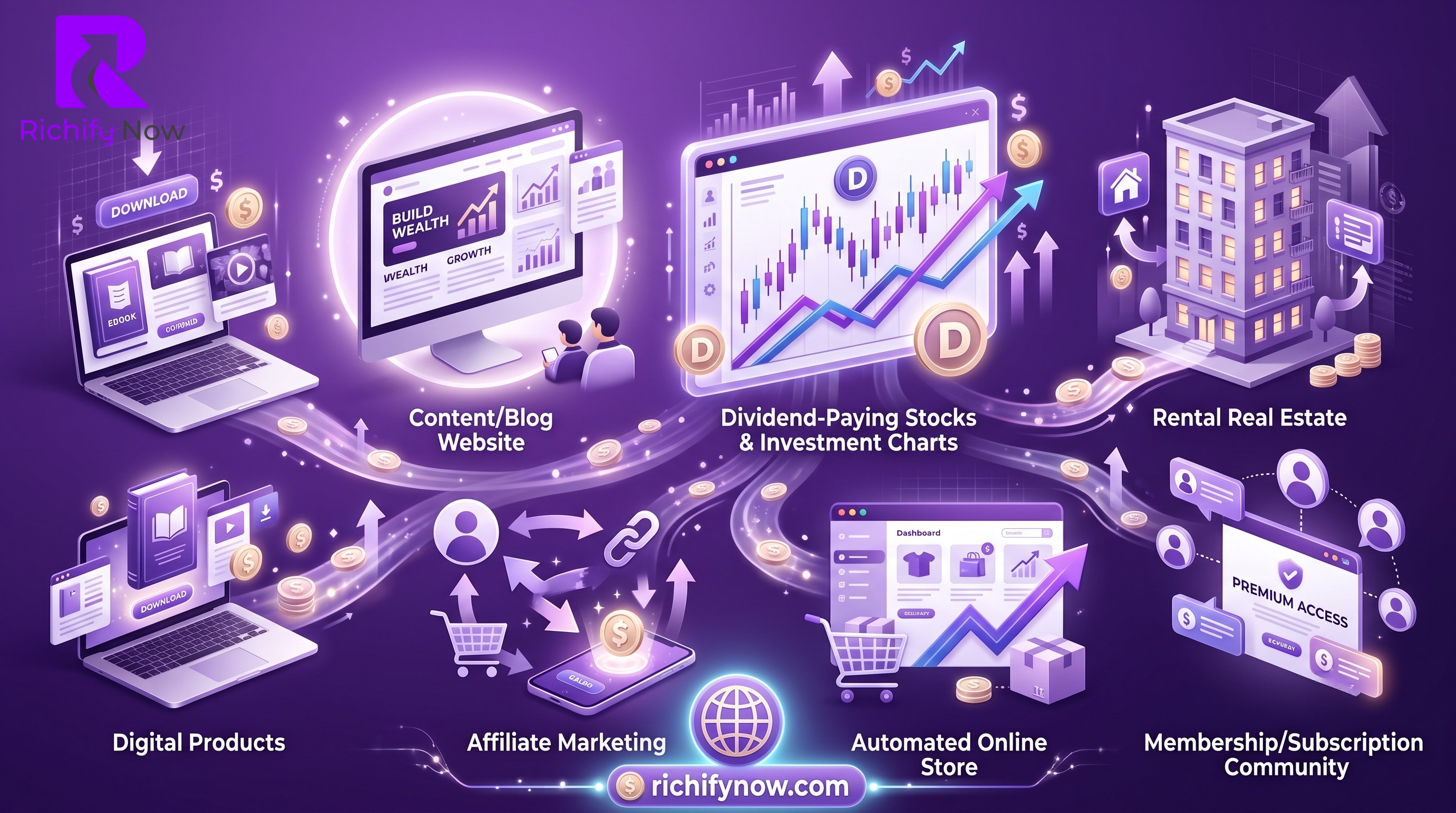
7 Passive Income Assets That Continue Paying Long After the Work Is Done
Discover powerful income systems that can keep generating money long after the initial work is completed. Learn how to build assets that support long-term wealth.
Passive income assets can include digital products, blogs, newsletters, rental assets, dividend-paying investments, memberships, and software-like systems. Most require upfront work, capital, skill, or maintenance before they become meaningfully passive.
Everyone wants passive income, but very few people understand what it really means. Many people imagine money arriving every month without effort, planning, skill, patience, or risk. That version sounds attractive, but it is not realistic. Real passive income is built through assets, systems, and smart decisions. It usually requires work in the beginning, but the goal is to create something that continues to generate returns after the main effort has already been done.
A passive income asset can be a digital product, an online platform, an investment, a rental property, a content library, or a business system that does not need your daily attention to survive. The power of these assets is simple. They separate income from direct working hours. Instead of earning only when you are actively working, you start earning from something you created, bought, or built earlier.
This is one of the biggest differences between ordinary income and wealth-building income. Ordinary income stops when the work stops. Passive income has the potential to continue even after the first phase of work is complete. That does not mean it needs zero maintenance. Every asset needs attention, updates, protection, and sometimes reinvestment. But compared to trading time for money every day, passive income assets can give you more freedom, more stability, and more long-term financial control.
In this guide, we will explore seven passive income assets that can continue paying long after the work is done. Some are digital. Some are financial. Some are business-based. Some require more capital, while others require more skill and consistency. The best choice depends on your resources, risk tolerance, knowledge, and long-term goals.
1. Digital Products That Sell Again and Again 📦
Digital products are one of the most attractive passive income assets because they can be created once and sold many times. Unlike physical products, they do not require inventory, shipping, packaging, or storage. Once the product is complete, the same file, template, course, guide, or resource can be delivered automatically to hundreds or thousands of customers.
Examples of digital products include eBooks, online courses, Notion templates, Excel sheets, budgeting planners, social media kits, business checklists, resume templates, website themes, design assets, and paid guides. The product may take days, weeks, or even months to build properly, but after that, the delivery process can be automated.
The biggest strength of digital products is scalability. A freelancer may need to work with one client at a time, but a digital product can serve many people at once. A financial planner can create a budgeting template. A designer can create brand kits. A marketer can create ad strategy guides. A fitness trainer can create workout plans. A teacher can create study resources.
Why digital products keep paying
- They can be sold repeatedly without recreating the product
- Delivery can be automated through websites or marketplaces
- They can be updated and improved over time
- They work well with content marketing, SEO, and social media
- They require low operational cost after creation
The challenge is that a digital product must solve a real problem. People do not buy files. They buy shortcuts, clarity, convenience, and results. A simple checklist that saves someone five hours can be more valuable than a long eBook nobody finishes. The winning digital product is not always the biggest one. It is often the clearest and most useful one.
To make this asset more passive, you need a strong sales page, payment system, automated delivery, email sequence, and traffic source. Once those pieces are connected, the product can continue selling while you focus on other work.
2. Content Websites and Blogs That Earn From Traffic 🌐
A content website is another powerful passive income asset. The idea is simple. You publish helpful articles around a specific niche, attract visitors through search engines, social media, or direct traffic, and then monetize that audience through ads, affiliate links, digital products, sponsorships, or lead generation.
This model takes time because content needs to build authority. A new website usually does not earn much in the beginning. It may take months of consistent publishing before search engines begin sending meaningful traffic. But once strong articles start ranking, they can continue attracting visitors for a long time.
For example, a blog about personal finance can publish guides on budgeting, investing, passive income, debt management, and wealth psychology. A blog about SaaS tools can compare software, explain workflows, and review platforms. A real estate blog can explain buying, selling, construction costs, property investment, and market trends.
The key is to build a content library, not just random posts. Each article should answer a question people are already asking. Over time, these articles become digital assets. They may continue bringing traffic even when you are not actively promoting them every day.
Common monetization options
- Display ads
- Affiliate marketing
- Sponsored posts
- Lead generation
- Paid newsletters
- Digital products
- Consultation bookings
A content website becomes stronger when it focuses on one clear audience. A general blog about everything is harder to grow. A focused website about wealth building, small business systems, passive income, investing, or digital tools has a better chance of becoming known for a specific topic.
The passive side appears when your older articles continue to bring traffic and revenue. However, maintenance is still important. You need to update outdated information, improve internal links, refresh SEO titles, add better images, and optimize conversion points. A content website is not fully hands-off, but it can become a strong long-term income engine.
3. Dividend-Paying Stocks and Funds 📈
Dividend-paying stocks are a classic passive income asset. When a company earns profits, it may share part of those profits with shareholders in the form of dividends. Investors who own dividend-paying shares can receive regular payments while still holding the asset.
This type of income is attractive because it does not require you to create a product or manage customers. You invest capital into companies or funds, and if those investments perform well and continue paying dividends, you receive income. Some investors use dividend income to cover expenses, while others reinvest dividends to buy more shares and grow future income.
There are different ways to approach this asset. Some people buy individual dividend stocks. Others prefer dividend-focused exchange-traded funds or mutual funds because they provide diversification. Diversification matters because no company is guaranteed to keep paying dividends forever. Businesses can reduce, pause, or cancel dividends during difficult periods.
Why dividend assets are powerful
- They can generate recurring cash flow
- They can grow through reinvestment
- They do not require daily business operations
- They can be easier to manage than physical assets
- They allow ownership in established businesses
The biggest requirement here is patience. Dividend investing is usually not a fast-money strategy. It works best when investors think long-term, avoid emotional decisions, and understand risk. Share prices can move up and down. Dividend payments can change. Markets can be volatile. That is why research and risk management are essential.
Dividend income becomes more powerful when combined with consistent investing. A small portfolio may not pay much at first, but over many years, reinvested dividends and capital growth can create a meaningful income stream.
4. Rental Property and Real Estate Income 🏠
Real estate has been one of the most popular passive income assets for generations. A rental property can produce monthly income while also potentially increasing in value over time. The basic idea is simple. You buy or control a property, rent it to tenants, and collect income after expenses.
Real estate is not fully passive in the beginning. Finding the right property, arranging financing, handling repairs, screening tenants, managing legal paperwork, and maintaining the property all require effort. However, once systems are in place, rental income can become much more stable and less dependent on daily work.
Some investors manage properties themselves. Others hire property managers to handle tenants, maintenance, rent collection, and inspections. Hiring management reduces profit but increases passiveness. The right choice depends on the investor's time, experience, and goals.
Types of real estate income assets
- Residential rental houses
- Apartments or portions
- Commercial shops or offices
- Short-term rental properties
- Storage units
- Real estate investment trusts
Real estate can be powerful because it combines cash flow, asset appreciation, and leverage. Leverage means using borrowed money to control a larger asset. This can increase returns, but it can also increase risk. Vacancies, repairs, interest rates, taxes, legal issues, and market downturns can affect profitability.
The smartest real estate investors do not buy emotionally. They study location, rental demand, property condition, maintenance costs, legal structure, and realistic cash flow. A beautiful property is not always a good investment. A profitable property is one where the numbers make sense.
Rental property becomes a strong passive income asset when it is treated like a business, not just a purchase. Good systems for tenant selection, repairs, accounting, and management can turn real estate into a long-term income machine.
5. Affiliate Content That Keeps Producing Commissions 🔗
Affiliate marketing is a passive income model where you recommend products or services and earn a commission when someone buys through your referral link. It works especially well when combined with blogs, YouTube channels, newsletters, comparison pages, social media, or niche communities.
The asset here is not just the affiliate link. The real asset is the content that attracts the right audience and helps them make a decision. A strong comparison article, review video, tutorial, or buyer's guide can continue generating commissions long after it is published.
For example, a blog post titled "Best Budgeting Apps for Beginners" can recommend finance tools. A SaaS article can compare project management platforms. A tech website can review hosting providers, VPNs, automation tools, or CRM software. A creator can produce tutorials showing how to use a specific platform and include an affiliate link.
What makes affiliate income sustainable
- Honest product recommendations
- Helpful comparison content
- Strong search intent
- Clear audience targeting
- Trust-based content
- Updated reviews and guides
Affiliate income works best when trust comes first. If every product is described as "the best," readers stop believing you. A strong affiliate article explains who the product is for, who it is not for, what the pricing looks like, what problems it solves, and where it may fall short.
The passive side of affiliate marketing comes from evergreen content. A well-ranked article or video can keep bringing buyers month after month. But like all assets, it needs maintenance. Links must be checked. Products may change. Pricing may change. Competitors may improve. Old content must be refreshed to stay useful.
Affiliate marketing is not just about inserting links. It is about becoming a reliable guide in a market where people are overwhelmed by options.
6. Automated Online Stores and Print-on-Demand Products 🛒
An automated online store can become a passive income asset when the product creation, order processing, payment collection, and delivery are handled through systems. One popular example is print-on-demand. In this model, you create designs for items like shirts, mugs, notebooks, posters, phone cases, or bags. When a customer orders, a third-party provider prints and ships the product.
This removes the need to buy inventory in advance. You do not need to store boxes, handle packaging, or ship every order yourself. Your main work is choosing a niche, creating designs, building the store, writing product descriptions, running marketing, and improving conversion.
The same idea can apply to other automated e-commerce models. Some stores sell digital downloads. Some use dropshipping suppliers. Some sell templates, presets, or online resources. The common goal is to reduce manual work through automation.
Why automated stores can keep paying
- Orders can be processed without manual handling
- Products can be sold globally
- Designs and listings can stay active for years
- Marketing systems can be automated
- Customer emails and follow-ups can run automatically
However, this asset requires strong positioning. A random store with random products rarely succeeds. A good store has a clear audience. It may serve pet lovers, gym enthusiasts, entrepreneurs, teachers, gamers, parents, or professionals in a specific niche.
Design quality also matters. People buy products that connect with their identity, humor, lifestyle, profession, or personal interests. A simple design can sell well if it speaks directly to a specific group.
Automated stores become more passive when traffic systems are built. SEO, Pinterest, social media, email marketing, influencer promotions, and paid ads can all bring customers. The store may still need customer service and updates, but the income is less tied to daily labor than a traditional service business.
7. Subscription Communities and Membership Assets 👥
A subscription community or membership platform can become a powerful passive income asset because it creates recurring revenue. Instead of selling once, you provide ongoing value and members pay monthly, quarterly, or yearly.
This model can be used in many niches. A finance expert can create a wealth-building community. A business coach can create a founder group. A designer can create a template club. A fitness trainer can create a workout membership. A marketer can create a private resource library. A teacher can create a paid learning group.
Memberships are not fully passive, especially at the start. They require community building, content creation, support, engagement, and regular value. But over time, a strong membership can become system-driven. You can create a resource library, automated onboarding, monthly templates, recorded lessons, guest sessions, and community discussions.
What people pay for in memberships
- Exclusive knowledge
- Templates and resources
- Community support
- Accountability
- Regular updates
- Access to expert guidance
- A shortcut to better results
The power of this asset is recurring revenue. A one-time product sale is valuable, but a membership can create predictable monthly income. This makes it easier to plan, reinvest, and grow.
The challenge is retention. People will not continue paying if they do not feel value. A successful membership must solve an ongoing problem. It should not depend only on excitement at the time of signup. Members need reasons to stay.
A membership becomes more passive when content is organized, onboarding is automated, community rules are clear, and members can get value without always needing direct personal attention from the founder.
How to Choose the Right Passive Income Asset
Not every passive income asset is right for every person. The best choice depends on what you have more of right now: time, capital, skills, audience, or experience.
If you have more skills than money, digital products, blogs, affiliate content, and memberships may be better starting points. These require creativity, consistency, and patience, but they can often be started with lower upfront costs.
If you have more capital than time, dividend assets, funds, and real estate may be more suitable. These can still require research and management, but they are more capital-based than content-based.
If you already have an audience, digital products, memberships, affiliate offers, and online stores can grow faster because you already have attention. If you do not have an audience, you may need to build one through SEO, social media, newsletters, or paid campaigns.
A common mistake is chasing too many income streams at once. Many beginners start a blog, launch a store, buy stocks, create a course, open a YouTube channel, and join affiliate programs at the same time. This usually leads to scattered effort and weak results.
A better strategy is to choose one asset, build it properly, improve it, and only then expand. Passive income grows through focused execution, not random activity.
The Real Secret: Build Once, Improve Forever
The phrase "long after the work is done" does not mean you build something once and never touch it again. It means the original effort keeps producing value. A blog post may need updates, but the main article already exists. A rental property may need repairs, but the asset already produces rent. A digital product may need improvements, but the original product can keep selling.
This is the mindset shift. Passive income is not about escaping all work. It is about doing work that compounds.
A normal job pays once for the hour you worked. A passive income asset can pay many times for the work you already did. That is why assets are so important in wealth building. They allow your past effort to continue creating future income.
The sooner you start building assets, the sooner they can start working for you. The first asset may be small. The first product may not sell much. The first blog may take time. The first investment may pay very little. But every serious wealth system begins with small assets that grow through consistency.
Conclusion: Passive Income Is Built, Not Found
Passive income is one of the most powerful ideas in personal finance, but it must be understood correctly. It is not a shortcut for lazy money. It is a strategy for building assets that can continue paying after the first effort is complete.
Digital products, content websites, dividend assets, rental properties, affiliate content, automated stores, and membership platforms all have the potential to create long-term income. Each one has different risks, requirements, and rewards. Some need capital. Some need skill. Some need audience. All of them need discipline.
The smartest approach is to stop asking, "How can I make money quickly?" and start asking, "What can I build today that may still pay me next year?"
That question changes everything. It moves you from short-term earning to long-term ownership. It helps you think like an asset builder instead of only a worker. It pushes you to create systems, products, investments, and platforms that continue producing value.
Passive income is not created by luck. It is created by choosing the right asset, doing the work upfront, improving the system, and allowing time to multiply the results.
The work you do once can become income you receive many times. That is the true power of passive income assets.
Start Building Income That Outlives Your Effort 🚀
The path to financial freedom begins with assets. Choose one income system, build it with patience, improve it with discipline, and let it become a long-term source of value.
Passive Income Asset Scorecard
Download the editable RichifyNow workbook with instructions, working fields, disclaimer, and the complete source-document specification.
Loading comments…