
Wealth Building
Investing can help build long-term wealth, but beginners need to understand risk, diversification, time horizon, fees, behavior, and personal financial readiness before making decisions. RichifyNow's investing content is educational and does not provide personalized investment advice.
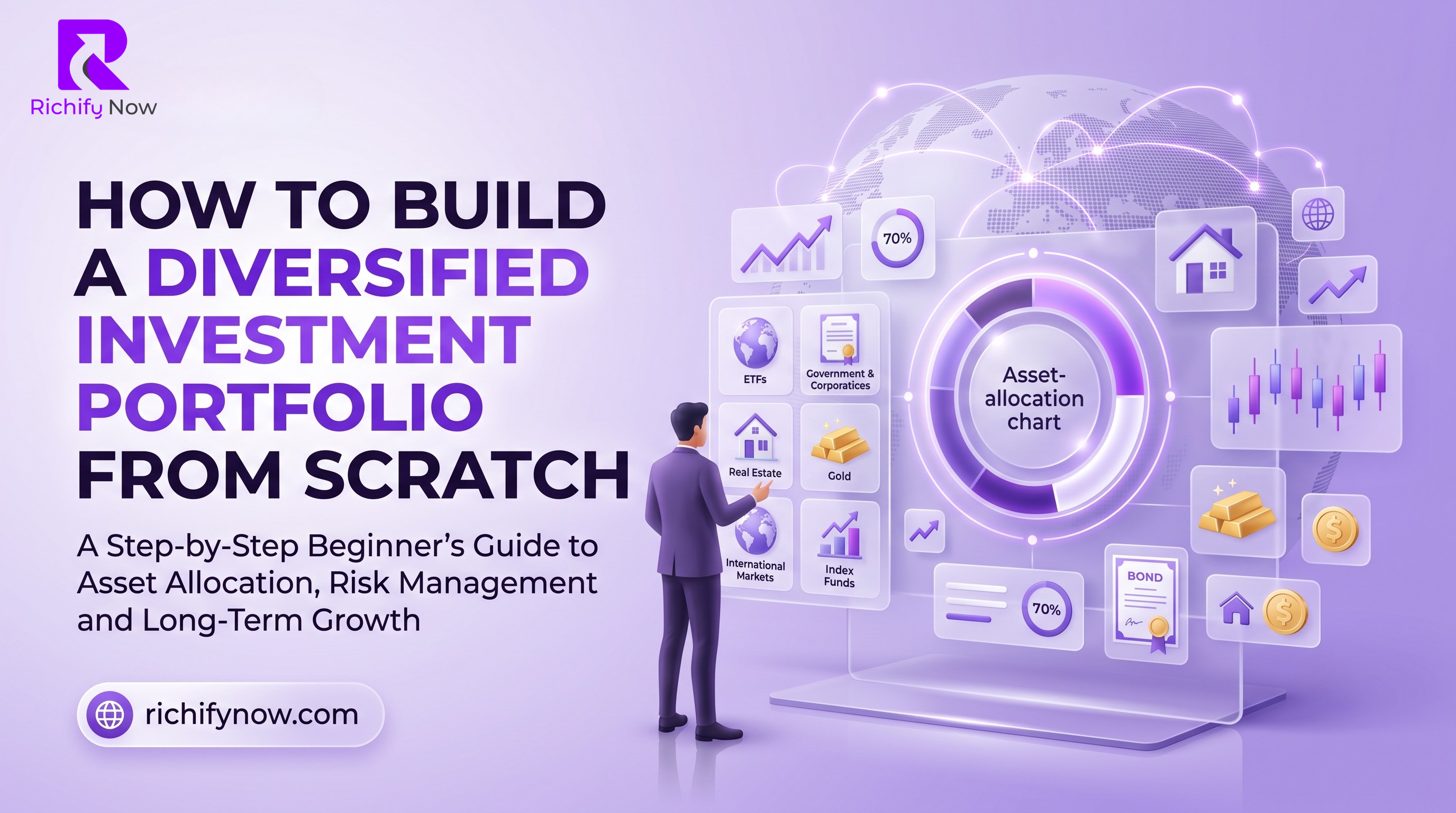
Beginner investing starts with understanding risk, time horizon, diversification, emergency savings, debt, and simple investment options such as broad funds or individual stocks. The right approach depends on personal goals and should be researched carefully.


Frequently Asked Questions About Investing
Beginners should first understand their financial goals, investment timeline, emergency savings, debt obligations, risk tolerance, account options, fees, and potential losses. They can then study different assets and diversification approaches before committing money. Investing involves risk, and no investment strategy guarantees a profit.
ETFs may be easier for many beginners because one fund can hold a range of companies, industries, bonds, or other assets. Individual stocks provide ownership in specific companies but create greater exposure to company-specific risk. Some ETFs are narrowly concentrated, so investors should still examine their holdings, fees, strategy, and risks.
Diversification means spreading investments across different assets, companies, industries, or markets instead of concentrating all capital in one position. Its purpose is to reduce the effect that one poor-performing asset may have on the overall portfolio. Diversification can manage risk, but it cannot guarantee returns or prevent every loss.
The appropriate amount depends on income stability, expenses, emergency savings, debt, goals, and risk tolerance. A beginner should avoid investing money needed for near-term bills or emergencies. Starting with a manageable recurring amount may be more sustainable than investing a large amount without a financial foundation.
Important risks include market loss, inflation, concentration, liquidity limitations, high fees, fraud, volatility, currency exposure, interest-rate changes, and emotional decision-making. More complex or unfamiliar products may carry risks that are difficult to evaluate. Investors should research investments and verify the background of investment professionals before transferring money.
We will use this email to record and deliver your requested resource.